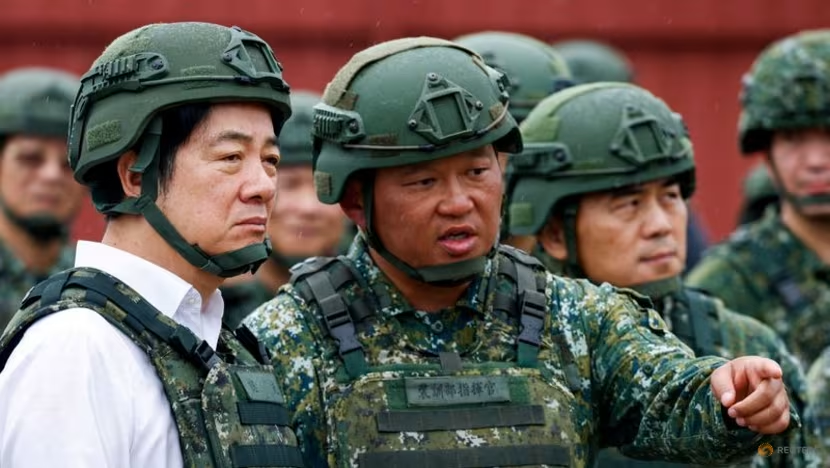
TAIPEI, 22 August 2025 – President Lai Ching-te has heralded a new strategic ambition for Taiwan: raising the island’s defence spending to 5% of its gross domestic product (GDP) by 2030, a bold escalation well above current levels. His remarks came during a visit to a naval base on Taiwan’s northeast coast, underscoring mounting concerns over mainland China’s military activity and ongoing external pressures to boost self-defence capabilities.
Strategic Shift and Rationale
This significant shift in the fiscal posture marks a deliberate alignment with what Taiwan’s leaders describe as the “NATO model”, which includes the coast guard and veterans in the comprehensive defence calculation.
Taiwan’s government recently disclosed next year’s defence budget—projected at 3.32% of GDP—the highest allocation since 2009. Notably, this includes spending on the coast guard for the first time, signaling recognition of its frontline role in deterring maritime threats.
Domestic and International Implications
President Lai’s announcement reflects dual motivations: to fortify Taiwan’s national sovereignty and adhere to global expectations.
“This not only demonstrates our determination to safeguard security and defend democracy, freedom, and human rights,” he said, “but also underscores our commitment to stand shoulder to shoulder with the international community in maintaining peace and stability in the Indo-Pacific.”
Lai further pledged enhanced collaboration with international partners on weapons research, development, and production—though specific details were not disclosed.
Contextual Overview
This expanded defence push comes amid continual pressure from both Beijing’s aggressive posture and Washington’s expectations that Taipei should invest more heavily in its own security—similar to what is expected of NATO members.
The recent boost to 3.32% of GDP reflects a growing alignment with Western alliances, even while maintaining reliance on U.S. military supplies and sustaining its burgeoning domestic defence manufacturing.
Source: CNA
