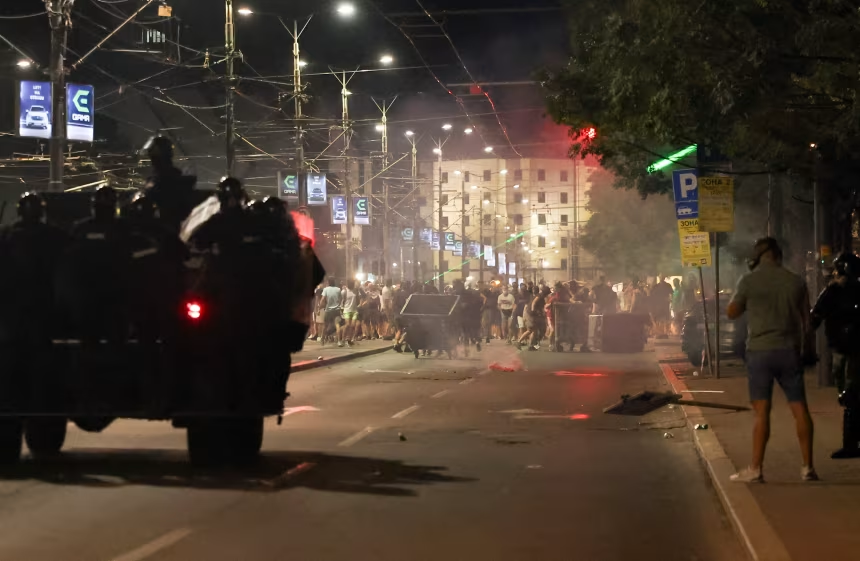
Belgrade, Serbia: Serbia is convulsed in unrest as anti-government demonstrations, initially sparked by a tragic infrastructure collapse, have escalated sharply across the nation. What began as student-led protests nine months ago following a disastrous train station canopy collapse in Novi Sad—an incident that claimed 16 lives—has transformed into a widespread uprising against systemic corruption, suppression of dissent, and mounting authoritarianism.
From Mourning to Mobilization
What began in late 2024 as solemn vigils and silent memorials evolved rapidly. Students blocked universities, staged traffic halts synchronized with the exact time—11:52 a.m.—when the tragedy occurred, and organized large-scale rallies in university hubs such as Novi Sad, Niš, Kragujevac, and Belgrade.
These actions soon became the backbone of a broader anti-corruption movement. Citizens across demographic lines—students, educators, professionals—joined forces in demanding transparency, accountability, and early elections. The haunting slogans “corruption kills” and symbols like red handprints, bleeding doves, and bloody dove imagery became potent visual metaphors of public frustration and grief.
Unrest Spreads: Clashes, Fire, and Repression
In recent weeks, the situation has spiraled. In Belgrade and other cities like Novi Sad, Valjevo, and Niš, protesters clashed with riot police. Fires broke out in overturned trash bins; flares, rocks, and fireworks were hurled as police responded with tear gas, stun grenades, and arrests. Over 80 civilians and some 27 police officers were injured, and dozens detained across multiple cities.
Tensions flared further when masked agitators torched local offices of the ruling Serbian Progressive Party (SNS). The violence extended to public buildings—courts, municipal offices, and even a prosecutor’s office in Valjevo were damaged. Amid expanding unrest, the government unleashed riot squads, and President Aleksandar Vučić condemned protesters as “terrorists” and pledged a sweeping crackdown.
Government Response: Crackdown and Conspiracies
Responding to the tumult, authorities intensified security deployment—with thousands of police and gendarmerie mobilized nightly. Vučić dismissed protestors’ demands for early elections, instead portraying the unrest as a Western-led conspiracy to destabilize Serbia.
Human rights advocates and the Council of Europe issued urgent appeals for restraint. Michael O’Flaherty, the Commissioner for Human Rights, criticized what he termed “disproportionate force,” urging authorities to stop arbitrary arrests and de-escalate. Similarly, the Council of Europe Secretary-General deplored the heavy-handed police tactics and called for respect for peaceful protest.
Democracy at a Crossroads
These protests have placed President Vučić at a crossroads. Despite forging close ties with Moscow and Beijing, his maneuvers to suppress dissent and hold firm on his EU accession bid have drawn growing criticism both domestically and internationally.
As mass frustration solidifies, the prospect of a “pseudo-democracy” Cameroon-style—or akin to Georgia under authoritarian rule—is a looming concern. Analysts warn that Western passivity in the face of this crackdown could erode democratic standards in the Balkans.
Looking Ahead: High Stakes for Serbia and the Regio
Serbia finds itself in a pivotal moment. What began with grief and demands for accountability has morphed into an existential struggle over democratic governance. With protests intensifying and state security responses escalating, the nation’s future hinges on whether Vučić’s government opts for dialogue—or further repression—and whether international partners will prioritize democratic integrity over strategic alliances.
Source: CNN
